Blog

  • Love Letter for the Long Visa Wait: When Bureaucracy Stands Between You

    Love Letter for the Long Visa Wait: When Bureaucracy Stands Between You

    A visa wait is a strange kind of distance. You are not separated by a fight, or by choice, or by the slow drift that ends a lot of long-distance relationships. You are separated by a stack of paperwork sitting in a building neither of you can walk into. A letter, written in the middle of that wait, does something the immigration forms cannot. It reminds both of you why you started filling them out in the first place.

    Why this letter matters

    Visa waits are long, and they are often longer than the timeline you were originally given. Months slip into years for many couples. Across that stretch, the relationship can start to feel administrative. You are sharing scans, biometrics, evidence of cohabitation, photos of you at someone’s birthday for the file. A love letter sits outside all of that. It is the only document that is just for the two of you.

    The letter is also useful on the worst days. There are days during a visa process where one of you will get a generic email from a government office that knocks the air out of you for a week. Having a letter in a drawer, on those days, is a small anchor. It says, this is still about us. The forms are not what we are.

    You are not writing to fix the timeline. You are not writing to ask them to be patient. You are writing because the wait is its own season of the relationship, and seasons of a relationship deserve to be marked. The letter is the marker.

    What to put on the page
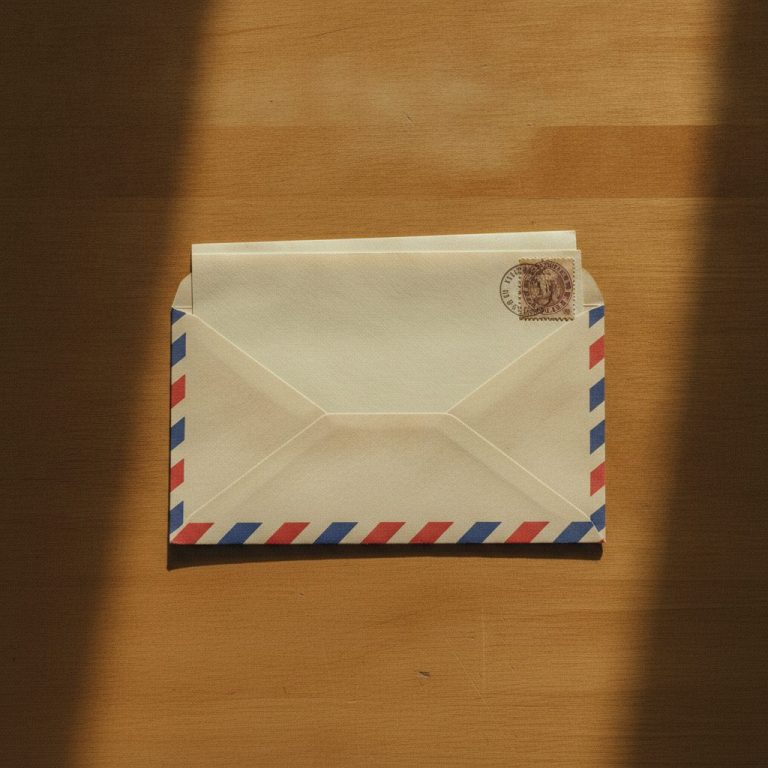
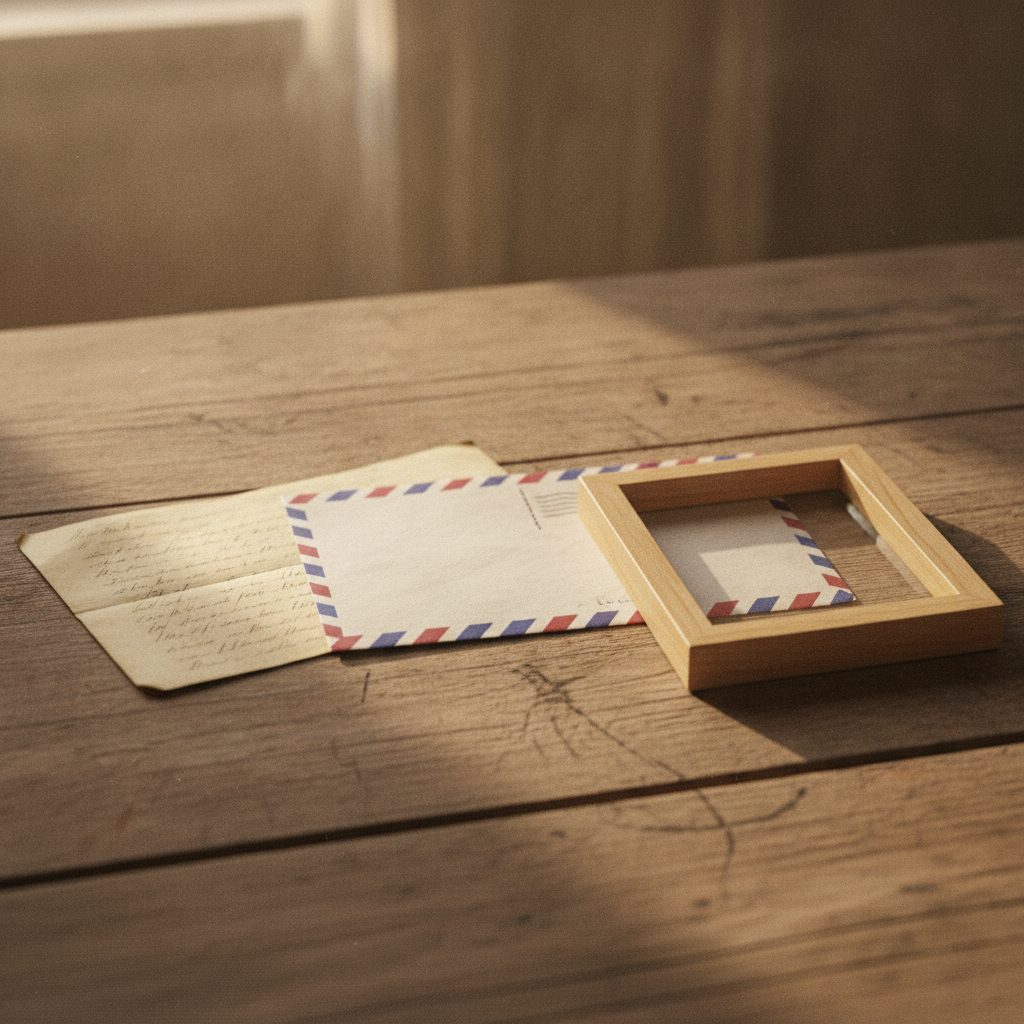
    A folded letter inside a red-and-blue chevron airmail envelope with a single stamp
    Long Distance Love Letters

    Start by naming the wait, plainly, without bitterness. “It has been seven months since we filed.” “We are eleven weeks into the medical hold.” “Today the timeline tracker said another four to six months.” Naming the wait stops it from being the invisible third person in the relationship. The page can hold it for you.

    Then talk about something specific and small from your life right now. What you cooked tonight. What the light was like in the flat at six o’clock. The story your nephew told you on the phone. The wait makes the small details of your separate lives feel further away than they are. Putting one on the page brings the reader closer to your evening.

    Tell them what you are doing with the wait, gently. Not a productivity list. “I have been reading more in the evenings.” “I have started running again, the long way around the park.” “I cooked the recipe your mother sent and I think I got it right.” Small good things being built in the wait give the letter a forward shape.

    End with what you are still planning, plainly. Not the wedding, not the move, not the joint mortgage. One small specific plan you can hold. “When you land, I want to drive you to the coast and not talk about paperwork for a weekend.” That is the line they will reread on the hard days.

    The honesty the wait needs

    It is fine to admit the wait is hard. The letters that pretend everything is easy do not land, because the reader on the other end of a visa process knows exactly how hard it is. A sentence like “I am tired this week” lands better than a forced cheerful paragraph. The point is not to perform optimism. The point is to keep the conversation honest across the gap.

    It is also fine to admit the wait has changed you. Long waits do. You are not the same person you were when you filed. Your reader is not either. The letter can quietly acknowledge that, without making it sound like a problem. Couples who survive long visa waits often say the wait itself became part of the story of the relationship, not an interruption to it.

    What the letter should not do is litigate the process. Do not list the things the immigration system has done wrong. Do not catalogue the unfairnesses. Your partner already knows. A letter that becomes a complaint loses its shape. Save the complaint for the call with the lawyer. Keep the page for the two of you.

    Examples to borrow from

    Letters across the long wait.

    What to avoid

    • A list of grievances against the immigration system. Save it for the lawyer.
    • Forced cheerfulness. They know the wait is hard.
    • Big promises tied to dates. Visa dates move.
    • Apologising for being tired. The wait is exhausting for both of you.
    • Treating the letter as a status update. It is not a progress report.

    Frequently asked questions

    How often should I write during the wait?

    Whenever the urge is there. Some couples write monthly, some quarterly, some only on hard weeks. There is no correct frequency. A letter written when you actually have something quiet to say lands better than one written on schedule because it was a Tuesday.

    Should I send it by post even though it is slow?

    If you can, yes. A physical letter arriving in a different country, in your handwriting, on real paper, carries a weight the email cannot match. Scans are fine when post is unreliable, but the paper version is the one that gets kept in a drawer for years.

    What if the wait gets extended?

    Write a short letter about that, plainly. Then keep most of the letter on small life details, the way you would in any other month. A whole letter about the extension is heavier than a calm sentence that names it and moves on to what you cooked tonight.

    What if I do not know what to say after months of waiting?

    Then write a small letter. Half a page. One specific thing you did today, one small thing you miss about them, one short line about the wait. The letter does not have to be a milestone. It just has to keep the page warm between the two of you while the paperwork moves.

    Further reading

    For a wider read on how the New York Times has framed modern letter writing across distance, see Modern Love: the letters of love.
  • Love Letter When They Stopped Trying: A Quiet Reckoning

    Love Letter When They Stopped Trying: A Quiet Reckoning

    There is a particular kind of love letter that does not get written enough, because it is so hard to write. It is the letter to someone who has not left, but who has quietly stopped showing up. The relationship is still there on paper. The day-to-day has gone flat. You are writing not because you want to end it, and not because you are sure how to save it, but because the silence in the house has become louder than anything you can say out loud. The letter is the reckoning the conversation has not had.

    Why this letter matters

    Most relationships do not end in a big moment. They thin out across months and years, and the person on the other side often does not see it happening from inside. A letter, written quietly, gives them the chance to see it without the temperature of a live argument. They can read it once, sit with it, and respond on their own time. That is something a conversation rarely allows.

    You are also writing for yourself. The act of naming what has changed, in writing, makes it real in a way that a thousand circular thoughts in the shower never quite can. The letter does not have to be sent to do that work. Many readers write this kind of letter, never send it, and find that the writing alone clears the air inside their own head.

    This letter is not an ultimatum. It is not a list of grievances. It is a quiet, honest description of where the relationship is, as you experience it, and a calm invitation to look at that together. Whether the relationship continues after the letter or not, the writing of it is usually a turning point.

    What to put on the page

    An empty wooden chair beside a folded letter on a table, soft grey daylight
    Sad Goodbye Love Letters

    Start by naming the change, gently. Not what they did wrong. What has shifted. “Something has gone quiet between us this year.” “We have stopped reaching for each other in the small ways.” “The house feels emptier than it should, given that both of us are still in it.” One sentence of careful observation sets the whole tone.

    Then say what you miss, in specific terms, with no blame attached. “I miss the way we used to talk on Sunday mornings.” “I miss the small touches when one of us walks past the other in the kitchen.” “I miss being asked about my day in a way that meant the question.” Specific missing lands. General complaint does not.

    Tell them what you are not asking for. “I am not asking you to apologise.” “I am not asking you to promise anything tonight.” “I am not writing this to end us.” Saying clearly what the letter is not for is what makes the reader safe enough to take in what it is for.

    Then say what you are asking for, modestly. A conversation. A weekend without screens. One small returning gesture. “I would like us to sit down on Saturday and talk, without a list, without a plan, just to be in the same room paying attention to each other.” Small asks land. Big ones close the room.

    The tone the letter has to hold

    Quiet. That is the whole tone. Not sad, not angry, not desperate. Quiet. The reader is going to be defensive no matter how carefully you write, because the letter is naming something they may not want to see. The quieter the page, the less defensible the defensiveness becomes. A loud letter gives them somewhere to push back. A quiet one does not.

    Read the letter back out loud before you give it to them. If any sentence sounds like an accusation, soften it. Replace “you stopped” with “something stopped”. Replace “you do not” with “I have not felt”. The shift from blame to observation is small in word count and enormous in reception.

    If you cannot keep the letter quiet, the letter is not ready. Put it away for a week. Come back. The version that survives a week and still feels honest, without slipping into a list of charges, is the one that has the best chance of being heard. That is the version to put in their hands.

    Examples to borrow from

    Letters written when the trying had stopped.

    What to avoid

    • A list of things they have stopped doing. It will read as a charge sheet.
    • An ultimatum. The letter is a door, not a deadline.
    • Comparing the relationship to other people’s. They cannot fix that.
    • Writing it in the heat of an argument. Wait until the room is quiet.
    • Demanding a reply by a date. Let them sit with it.

    Frequently asked questions

    What if they read it and nothing changes?

    Then you have your answer, and you have it on cleaner ground than a long argument would have given you. Some readers will respond. Some will go quiet. A few will react badly. All three are real outcomes. The letter is honest no matter which one happens, and the honesty itself is part of what you needed.

    Is it better to talk first, or write first?

    If talking has stopped landing, write first. The letter is useful precisely because conversations are not working. If talking is still landing well, you probably do not need this letter. Trust the form to do what speech has not been able to.

    What if I am not sure I still want the relationship?

    Write the letter anyway. Many people find that putting the truth on a page makes their own feelings clearer to themselves. You do not need to know the answer before you write. You may know it better after.

    Should I give them the letter or read it to them?

    Give it. Reading it aloud puts them under the eye contact, which makes defending easier than absorbing. A page in their hand, read alone, gives them the time and the space to take in what you have said without performing a reaction.

    Further reading

    For a thoughtful read on letters written from inside long quiet relationships, see The Atlantic on the lost art of love letters.

  • New Year Love Letter: For the Year You Want to Build Together

    New Year Love Letter: For the Year You Want to Build Together

    A New Year letter is one of the gentler love letters to write. You are not apologising, you are not saying goodbye, you are not asking for a second chance. You are simply marking the turn of a year with the person you want to spend the next one with. The letter is not a contract. It is a quiet record of what you noticed this year, and what you hope to build in the next.

    Why this letter matters

    Most couples mark the new year with a kiss at midnight and a few half-formed resolutions. A letter is something different. It sits past the first week of January, when most resolutions have already softened. It stays in a drawer for years and is read on quiet Sundays, when the noise of the new year has long faded.

    The letter is also a chance to slow down, at the end of a year that probably did not go exactly as you planned. You get to look back at the small good things that actually happened, and name them. Most couples never sit down and do that on purpose. The letter forces a kinder kind of attention.

    You are not writing to set goals for them. You are not writing to grade the year you had. You are writing because the turn of a year is a useful moment to put a few quiet truths on a page, and the page will hold them better than a midnight conversation ever could.

    What to put on the page

    A small stack of envelopes tied with twine beside a single rose on a wooden table
    Occasions

    Start by naming a few things from the year just gone. Not a highlight reel. Small specific moments. “The morning in October when we finally cleared out the spare room.” “The week your mother was in hospital and we kept the house running together.” “The Tuesday we ate dinner on the floor because the table was covered in paperwork.” Specific memory is the whole engine of this letter.

    Then say what you have noticed about them this year. Not what they did for you. What you have seen them grow into, or grow through. “I have watched you get better at saying no to your boss.” “I have seen you become a more patient parent.” “You have got softer in a way that has surprised both of us.” That kind of observation lands, because it tells them you have been paying attention.

    Say what you hope for the year ahead, modestly. Not a list of goals. One or two small wishes. “I would like more Sunday breakfasts without our phones.” “I would like us to take that drive we keep talking about.” “I would like to keep building what we already have.” Modest hopes are more durable than ambitious ones.

    End with a soft line. “Thank you for this year. I am glad we are starting the next one together.” Or something quieter that fits how you actually speak to each other. Then sign it the way you would sign any note to them, and put the date at the top.

    When to write it, and when to give it

    The week between Christmas and New Year is the natural window. You both have a little more time. The world is quieter. The letter, written in that stretch, lands with the weight of a year that has just ended and one that is about to begin.

    Give it on New Year’s morning, not the night before. Midnight is loud. The letter is a quiet thing. The morning of the first, with coffee, with the house still sleepy, is when the page can actually be read. They will keep it longer for that.

    If you want to make a tradition of it, write one every year and keep them in the same place. Years later, the stack of New Year letters will tell the story of your relationship in a way no photograph album quite manages. Many couples who do this say the second and third letter are harder to write than the first, and the tenth is the easiest of all.

    Examples to borrow from

    New Year letters between couples, written quietly.

    What to avoid

    • A list of joint resolutions. A letter is not a planning document.
    • Grading the year. Nobody wants a school report on Christmas Eve.
    • Big promises about the next year. Modest hopes age better.
    • Giving it at midnight. Save it for the quiet morning.
    • Comparing your year to other people’s. The letter is about the two of you.

    Frequently asked questions

    What if the year was hard?

    Then say so, plainly. A New Year letter does not have to pretend the year was easy. Many of the gentlest ones are written after a difficult year and quietly name the difficulty before turning towards what you hope to build. That is more honest than a cheerful letter that skips the hard months.

    Should I write one every year?

    If you want a tradition, yes. Many couples find that the stack of letters becomes one of their most cherished possessions over time. If a tradition feels like pressure, write one this year, see how it feels, and decide next December whether to write another.

    What if my partner is not a letter writer?

    That is fine. You are not writing in order to receive one back. The letter is a gift, freely given. Some partners will write you one in return next year. Some will keep yours in a drawer and read it on quiet days without ever writing one of their own. Both are real responses.

    How long should it be?

    One page, sometimes a little more. A New Year letter is a small ritual, not a long retrospective. If you are still writing after two pages, you are probably writing a memoir, not a letter. Keep it short enough to be reread without effort, year after year.

    Further reading

    For a slow read on why letters are still worth writing in a world of faster messages, see The Cut on love letters and modern love.

  • Historical Love Letters and What They Still Teach Us

    Historical Love Letters and What They Still Teach Us

    People have been writing love letters for as long as people have been able to write. Some of those letters have survived, and a small number of them have become famous, read aloud in radio programmes and quoted in films and taught in literature classes. What is striking, when you sit with the originals, is how unguarded they are. The famous love letters are not famous because they are polished. They are famous because the writers said what they meant. That is the lesson worth carrying into a letter you might write this week.

    Here are seven historical letter writers worth reading, what made each of their letters land, and what you can borrow from them when you sit down with your own page.

    John Keats to Fanny Brawne

    John Keats was twenty-three when he met Fanny Brawne, his neighbour in Hampstead. He died of tuberculosis at twenty-five, a little over two years later, never having married her. The letters he wrote in that short window are among the most quoted love letters in the English language, partly because of who he was and partly because the writing is so unguarded.

    The Keats letters do not perform. He admits jealousy. He admits he cannot work for thinking about her. He writes, in one famous line, that he could die for her, and you believe him because he is dying. The letters land because there is no distance between the writer and the man on the page.

    What a modern writer can borrow: write the unguarded line, not the impressive one. Keats did not try to sound like a poet in his letters. He tried to sound like himself, talking to her. The Marginalian has published a beautiful selection of the Keats letters that show this clearly. Read three of them in a row and you will see how plain his sentences are, even when his feelings are not.

    Frida Kahlo to Diego Rivera

    Frida Kahlo’s letters to Diego Rivera, and to other lovers across her life, are full of colour, jealousy, art, pain, and the kind of physical writing few letter writers attempt. She wrote with the same intensity she painted with. The letters are not tidy. They circle, repeat, contradict themselves, and arrive at moments of startling clarity.

    What makes the Kahlo letters land is that she did not edit her feeling into something more manageable. Her relationship with Rivera was difficult, and her letters say so. She wrote love into the same page as anger, and they do not cancel each other. They sit side by side, which is closer to how love actually feels than the cleaned-up version most letter writers aim for.

    What a modern writer can borrow: allow more than one feeling on the same page. If you love someone and you are also frustrated with them, you do not have to write two separate letters. Smithsonian Magazine has a useful piece on Kahlo’s letters and what they reveal about the unedited shape of real love.

    Napoleon Bonaparte to Josephine

    Napoleon wrote Josephine hundreds of letters from the field, and they read very little like the letters of a military leader. They are demanding, urgent, sometimes possessive, sometimes tender. He complained when she did not write back fast enough. He told her about his sleep. He wrote in lines that sound modern, two centuries later.

    The Napoleon letters land because they are urgent. He was at war. He was tired. He wrote on the move. The letters do not pretend to be poetry. They are quick, hot, and entirely fixed on her. That urgency is rare in love letters today, which often feel as if the writer had plenty of time to make the page look nice.

    What a modern writer can borrow: write from the day you are actually in. If you are tired, say so. If you are writing on a bus, say so. The letters that survive across centuries are usually the ones rooted in a specific moment, not the ones polished for an imagined reader. The basic biographical record is summarised on Wikipedia’s love letter article for anyone wanting more context.

    Ludwig van Beethoven, the Immortal Beloved letter

    Beethoven wrote one letter, never sent, found among his papers after his death in 1827, addressed only to my immortal beloved. We still do not know for certain who it was for. Scholars have argued for over a century. The mystery is part of why the letter is famous, but it is not why the letter lands.

    What makes the Immortal Beloved letter land is that Beethoven wrote it in three sittings across two days, the morning, the evening, and the next morning. You can feel him moving through the hours. He starts hopeful, gets sad, recovers, drops into despair, and ends quietly. The letter is essentially a record of a man thinking about one person across a day and a half.

    What a modern writer can borrow: a letter does not have to be written in one sitting. Some of the best are written across a stretch of hours, with the time stamps left in. If you write the morning paragraph one morning and finish the letter the next, the reader can feel you living between the lines. That is part of what gives a letter its weight.

    Henry VIII to Anne Boleyn

    Henry VIII wrote Anne Boleyn a series of letters during the years he was pursuing her, before he made himself head of a new church largely so he could marry her. The letters survive because the Vatican took them, in the hope of using them against him. They are now in the Vatican Library, and they are very strange to read.

    The letters land because they show a king behaving like an ordinary lovesick man. He worries about whether she likes him back. He sends her gifts. He apologises for not writing sooner. He signs off with what was, in his hand, an unguarded affection. The letters undo the historical image of the man, and they do it in his own handwriting.

    What a modern writer can borrow: power, status, and reputation are not what makes a love letter work. Honesty does. The BBC’s overview of the most famous love letters in history includes the Henry VIII letters and is a good starting place if you want to read across centuries in one sitting.

    James Joyce to Nora Barnacle

    James Joyce wrote Nora Barnacle, his lifelong partner, a long stream of letters across their separations, and the letters became famous partly because some of them are extremely physical. They are not what most readers expect from a literary great. They are intimate, specific, and undignified in the best sense.

    What makes the Joyce letters land is the closeness. He wrote her as if no one else would ever read the pages. He used their private vocabulary. He referenced things only she would know. The letters break the rule that a love letter should be presentable. They were not for the public. They were for Nora, and the writing reflects that completely.

    What a modern writer can borrow: write for the reader, not for the imagined audience. Use the words only the two of you use. Reference the things only they will catch. The most personal letters are almost always the ones that travel furthest in private memory.

    Virginia Woolf to Vita Sackville-West

    Virginia Woolf’s letters to Vita Sackville-West are some of the most quoted love letters between women in the English language, and they read very differently from any of the others on this list. They are quiet, witty, observant. They notice the light in a room. They notice what Vita is wearing. They notice the rhythm of the day. They are letters of paying attention.

    What makes the Woolf letters land is the level of looking. She wrote love by writing close observation. She did not say I love you very often. She said, instead, what she had seen of Vita that day, and the love is in the seeing. That is a kind of writing that takes restraint, and it rewards rereading in a way louder letters do not.

    What a modern writer can borrow: love can be written as careful attention. You do not have to declare. You can describe. A letter that notices the specific small things about the reader is often felt more deeply than one that uses the word love a dozen times.

    What modern letter writers can take from this

    Read across these seven writers and a pattern shows up. The letters that survived the centuries are not the polished ones. They are the unguarded ones. Keats admits jealousy. Kahlo admits anger. Napoleon admits exhaustion. Beethoven admits despair. Henry VIII admits insecurity. Joyce admits private intimacy. Woolf admits attention.

    None of them tried to sound like a great writer. They tried to sound like themselves, on a page, talking to one specific person. That is the whole craft, even now. If you sit down to write a letter this week, you do not need to write better than Keats. You need to write as honestly as he did. The voice on the page should sound like you in a quiet room, not like you on a stage.

    For more practical help with your own page, see our how to write a love letter guide, our notes on the handwritten love letter, and our collection of love letter quotes and love letter examples from modern readers. The historical writers above wrote on paper, in candlelight, with quills and steel pens. You have better tools and the same task.

    Frequently asked questions

    Are the historical love letters above all real?

    Yes. Each of them is preserved in a museum, archive, or published collection. The Keats, Kahlo, Napoleon, Henry VIII, Joyce, and Woolf letters are widely reproduced. The Beethoven Immortal Beloved letter is held in the Berlin State Library. Wikipedia’s love letter article gives a useful overview with sources.

    Why are these letters still read?

    Because they are honest, not because the writers were famous. Most surviving love letters from history are dull. The handful that get reread across generations are the ones where the writer let their guard down on the page, and the reader can still feel that, sometimes hundreds of years later.

    Should I try to write like one of them?

    No. The lesson of these letters is not to imitate the style. It is to be as honest as they were. Keats sounded like Keats. Woolf sounded like Woolf. You should sound like you. The voice is the point, not the era.

    Where can I read more historical love letters?

    The BBC, The Marginalian, Smithsonian Magazine, and the websites of the British Library and the Morgan Library all hold accessible collections. Reading three or four in a row is a quick way to internalise how plain the surviving letters usually are.

    Do any of these writers ever send letters they later regretted?

    Almost all of them. Keats regretted letters written in jealousy. Joyce wrote letters he asked Nora to burn. Kahlo wrote and unwrote and rewrote across years. The regret is part of the record. It is also a small comfort to anyone afraid of getting a single letter exactly right.

  • Love Letter for Someone Who Doesn’t Know You Love Them

    Love Letter for Someone Who Doesn’t Know You Love Them

    Writing to someone who has no idea how you feel is one of the older, quieter acts in love. It is the letter that has been written in attics and dormitories and kitchen tables for hundreds of years. The shape of the letter has not changed much. What has changed is that we now have a thousand louder ways to tell someone how we feel, and most of them do the job worse. A letter is still the kindest opening line you can write.

    Why this letter matters

    You are choosing the slowest, most considered version of telling them. That choice itself says something. The reader, sitting alone with a page in their hand, gets to think before they have to answer. They are not put on the spot at a bar, or in the middle of a busy text thread, or in front of mutual friends.

    You are also giving yourself the chance to say it cleanly. Said out loud, the words come out tangled. Written down, you can choose them. You can read the sentence back, decide whether you actually mean it, and keep only the ones that are true. That is a gift to both of you.

    The letter does not have to lead anywhere. Many of the best letters of this kind have been written and never sent. Some are kept in a drawer for years. Some are read aloud once, to a friend, and then folded away. The point of the letter is not always the reply. Sometimes the point is the writing.

    What to put on the page

    Start with why you are writing, plainly. “I have been wanting to tell you this for a while.” “I am writing because saying it out loud has not been working.” “I do not know if you have noticed, but I have.” One short sentence is enough. The reader needs to know the letter is intentional, not casual.

    Tell them what you have noticed about them. Not a list of their virtues, which reads as a sales pitch. One or two specific things. “The way you stop mid-sentence when you are thinking.” “How patient you are with your mother on the phone.” “The fact that you read the menu before you sit down.” Small specific details say I have been paying attention, in a way no general compliment can.

    Then say what you feel, in the simplest language you can find. Not love at first sight, not soulmate, not the rest of my life. Something true. “I think about you more than I expected to.” “I would like to know you better than we know each other now.” “I have feelings for you that I do not know what to do with.” Plain is the right register here.

    Give them an exit. “You do not have to answer this letter.” “If you read this and feel awkward, please know I will not bring it up.” “I am not asking you for anything except to know.” That sentence is what makes the letter safe to receive, and it is what separates a love letter from a confession that puts pressure on the reader.

    The risk, and how to honour it

    This letter has a real chance of not being returned. They may not feel the same way. They may already be with someone. They may want to stay friends in exactly the shape you currently have. All of those are normal outcomes, and the letter has to be written in a way that survives any of them.

    That is why the exit line matters so much. Without it, the letter asks them to either reciprocate or feel guilty. With it, the letter is simply a piece of true information they now have. They can do whatever they want with it. The relationship between you does not have to break under the weight of the letter.

    If you are not sure you can write it without pressuring them, write it and do not send it. There is real value in writing the letter just to know what is in it. Some readers find that once the letter exists, they no longer need to send it. Others find that writing it is what makes them realise they do.

    Examples to borrow from

    Letters written to someone who did not yet know.

    What to avoid

    • Lines about destiny. They read as pressure, not affection.
    • Long lists of their virtues. One or two specific notices is plenty.
    • Asking for an answer by a date. The letter is not a transaction.
    • Sending it through a mutual friend without warning them. Hand-deliver or post.
    • Following up if they do not reply. Silence is an answer, gently received.

    Frequently asked questions

    What if they do not feel the same way?

    Then the letter has done its job, which was to be honest. You wrote the truth and you left them free to respond as they wished. If the friendship survives, it will be on cleaner ground. If it does not, it was already harder than you knew. The letter itself was a kindness either way.

    Should I sign it, or send it anonymously?

    Sign it, almost always. An unsigned letter puts the reader in the awkward position of guessing, which is worse than knowing. The only exception is if you genuinely do not want a reply, in which case write the letter for yourself and keep it.

    How long should the letter be?

    One page, sometimes less. A long letter to someone who does not yet know how you feel is harder to read than a short one. The reader is already a little stunned by the first paragraph. Keep the rest gentle, and finish before you start repeating yourself.

    What if I lose my nerve after sending it?

    That is normal. Many writers feel sick for a day or two after a letter like this is in someone else’s hands. The feeling passes. The letter itself was true when you wrote it, and it is still true now, even if your nervous system is not enjoying the wait.

    Further reading

    For a slow read on why writing a love letter is still a small act of courage, see Literary Hub on the radical act of writing a love letter.

  • Love Letter to Your Wife from Deployment: For the Quiet Nights

    Love Letter to Your Wife from Deployment: For the Quiet Nights

    A letter home from deployment is not the same as a text or a call. The phone cuts out, the connection drops, the time zones do not line up. A letter sits on the kitchen table when she gets in from work. It waits. It does not need a signal. That is the whole reason this kind of letter still matters in a world full of faster ways to talk.

    Why this letter matters

    Deployment is long in a way that is hard to explain to anyone who has not lived it. The two of you are running on different clocks. She is doing the school run while you are eating dinner. You are trying to sleep while she is at the supermarket. A letter is one of the only things that can sit in both your hands across that gap, even if hours or weeks apart.

    The letter is also a record. Years from now, when the deployment is just a chapter in your life together, the letter will still be in a drawer. She will read it again. You will read it again. The phone calls are gone the second they end. The page stays.

    Most of all, the letter tells her she is still the centre of the home you are coming back to. Not the mission, not the unit, not the next rotation. Her. That is what she needs to hear on the long nights, and it is the one thing only you can write.

    What to put on the page

    A pressed flower beside an open envelope on a soft marble surface, warm daylight
    Love Letters To Her

    Start with the small things. What you ate today. What the sky looked like at sunrise. The joke someone in your unit told. Small details ground the letter and make her feel close to your day, even if she cannot picture the place.

    Then tell her something specific you miss. Not “I miss you”, which she already knows. “I miss the way you hum when you are cooking.” “I miss your cold feet under the duvet.” “I miss the way you read the headlines out loud on Sunday.” Specific missing is what makes a deployment letter land.

    Tell her what you are holding onto. The photograph in your locker. The voice note she sent two weeks ago that you have played a hundred times. The plan you have for the first weekend after you get home. Small anchors keep her in the room with you while you write.

    End with something forward-looking. Not a promise about a date, because dates change. A promise about what you will do together when the time comes. “I want to take you for a slow breakfast somewhere quiet.” “I want to sleep in our bed for a week.” “I want to hear about every small thing I missed.” That is the line she will reread.

    What to leave out

    Leave out the heavy details of the deployment unless she asks for them. She is already worrying. The letter is not the place to confirm her worst guesses. Keep the hard parts general and the small comforts specific.

    Leave out the long apology for being gone. She knows you did not choose the timing. A single sentence of acknowledgement, “I know this stretch has been hard on you too”, is more useful than a paragraph of guilt.

    Leave out the rules about how often she should write back. She is running a whole household on her own. A letter that asks for nothing is the one that gets answered first, every time.

    Examples to borrow from

    Letters home from deployment, written quietly.

    What to avoid

    • Generic romantic lines. They read as filler from somewhere far away.
    • Heavy operational detail. It worries her and the letter cannot answer her back.
    • Promises tied to dates. Deployment dates move.
    • Asking her to write back on a schedule. She already has enough on.
    • A long guilt paragraph. One sentence of acknowledgement is enough.

    Frequently asked questions

    How often should I write home?

    As often as you can sit down with a clear head. Once a week is plenty. Once a month is plenty. Letters that arrive irregularly still land, because she is not measuring them, she is keeping them. Write when you have something quiet to say.

    What if I am not a writer?

    You do not have to be. The letter is not a piece of writing. It is a page from you, in your handwriting, that she gets to keep. Plain English is the whole brief. If you would say it at the kitchen table, you can write it on a page.

    Should I send it digitally or by post?

    If you can post it, post it. The physical letter is half the gift. A scan or a photo of the page is the next best thing, because it is still your handwriting. Typed in an email is fine when nothing else works, but the paper version is the one she will keep.

    What if the deployment gets extended?

    Write a short letter about that, plainly. “I know this is not what either of us wanted.” Then keep the rest of the letter on the usual ground, small details and what you miss. A long letter about the extension itself is harder for her to carry than a calm one that names it and moves on.

    Further reading

    For a quiet read on letters that hold couples together across distance, see NPR on letters of love and longing.

  • Apology Love Letter for Him: When You Need to Say It Right

    Apology Love Letter for Him: When You Need to Say It Right

    An apology love letter is not the place to explain yourself. It is the place to say, clearly, what you did, what it cost him, and what you are doing differently from now. Written well, it lands as honest. Written badly, it reads as another attempt to be the one who is right. The difference is mostly tone, and a willingness to leave a few things unsaid.

    Why this letter matters

    Most apologies between couples happen in the middle of an argument, or in the hour after, when both of you are tired and the words are not coming out right. A letter is the chance to apologise without the room, without the tone of voice, without the chance to talk over each other. He gets to read it in his own time. You get to mean every sentence.

    You are not writing to get out of the argument. You are not writing to make him feel guilty for being hurt. You are writing because something you did landed wrong, and he deserves to read one quiet page that says you know it landed wrong, and what you are doing about it.

    An apology letter also has a longer life than a spoken sorry. He may read it twice. He may put it in a drawer. Months later, when something similar happens, the letter is still on the record. That changes how an apology functions, and how seriously it is taken.

    What to put on the page

    A folded handwritten letter on a wooden desk with a fountain pen, warm morning light
    Love Letters To Him

    Name what you did, plainly. “I spoke over you on Sunday.” “I forgot the thing that mattered most to you this week.” “I lied about where I was on Friday.” One sentence. No softening verbs. He needs to see, before anything else, that you understand the specific thing you are apologising for.

    Acknowledge the cost to him, in his terms not yours. “I know that made you feel small in front of your sister.” “I know it confirmed something you have been worried about for months.” “I know it broke a promise I made last year.” That sentence shows him you have actually thought about the impact, not just your own embarrassment.

    Say what you are doing, specifically, not what you will try to do. “I am calling the counsellor on Monday.” “I have deleted the app.” “I am keeping my phone out of the bedroom from now on.” A concrete action is worth more than three paragraphs of intention.

    Close without asking for anything. Not for forgiveness, not for a reply, not for a hug. “You do not owe me anything for this letter” is the line that lets him receive it without feeling cornered. Then sign it as you would sign any quiet note to him.

    The lines to leave out

    Leave out the word “but”. Every “but” in an apology letter turns the apology into a defence. If you have an explanation, hold it for a real conversation later. The page is for the apology, not the context.

    Leave out a comparison to anything he has done. “I am sorry for X, and I know you also did Y” is not an apology. It is a counter. A letter with even one of those sentences will not land, no matter how long the rest of it is.

    Leave out the long story of how bad you have been feeling about it. That moves the focus from his hurt to yours. One sentence is fine. A paragraph asks him to manage your guilt, which is the opposite of an apology.

    Examples to borrow from

    Apology letters written without excuses.

    What to avoid

    • The word “but”. Every “but” cancels the apology.
    • Listing his faults alongside yours. Apologies are one-sided on purpose.
    • A long paragraph about your guilt. One sentence is enough.
    • Asking him to forgive you in writing. Leave the answer to him.
    • Sending it the same hour as the fight. Give it a day.

    Frequently asked questions

    How soon after the argument should I write?

    A day, sometimes two. The letter that comes the same hour reads as panic. The letter that comes a week later reads as too late. Sit with what happened overnight, then write the page once the loudest part has passed.

    What if he does not respond?

    That is his right. The letter is not asking for a reply. Some men read an apology letter, fold it up, and carry it for weeks before they know what to say. Silence is not the same as rejection. Give him the time the letter promised him.

    Should I hand it to him or post it?

    Hand it to him, in a calm moment, without standing over him while he reads. Posting it is fine if you are not in the same place, but if you live together, the gesture of placing the letter in his hand and walking out of the room is part of what makes it land.

    What if I am not sure he will believe the letter?

    Then make the action half the letter. Words alone do not convince. A sentence like I have already booked the counsellor, the first session is Tuesday is worth more than a paragraph of promises. Let the change speak alongside the page.

    Further reading

    For a long, considered read on letters and the way they hold what spoken words cannot, see The Atlantic on the lost art of love letters.

  • Love Letter to a Best Friend You’re Falling For

    Love Letter to a Best Friend You’re Falling For

    Falling for your best friend is its own kind of vertigo. The person you tell everything to is suddenly the one person you cannot tell this. A letter, written first for yourself, is the safest way to sort out what is real before you decide whether to say anything out loud. It will not make the decision for you. It will make sure that whatever you decide, you decided it from honesty and not from panic.

    Why this letter matters

    You are not the first person to land here. Plenty of long, happy relationships started as friendships that one person quietly carried for a while. Plenty of long, happy friendships have lasted because one person quietly carried a feeling and let it pass. Both endings are possible. The letter is what lets you tell which path is actually yours.

    The feeling is not a problem to be solved. It is information about how much this person means to you. Writing it down does not commit you to anything. It just gets the feeling out of the loop in your head and onto a page where you can read it back with a clearer mind.

    This page is also a way of taking the friendship seriously. Whatever you decide to do next, the friendship deserves to be considered carefully, not on a whim at two in the morning.

    What to put on the page

    A folded letter sealed with red wax in a half-open wooden drawer, dim warm light
    Secret Love Letters

    Start with the friendship as it is. The years, the inside jokes, the things only this person knows about you. A page of why this friendship matters comes first. It is the floor everything else stands on.

    Then name the new thing. “And lately I have started feeling something else too.” One sentence. Do not dress it up. The plainness is what lets you read it back and know whether it is a passing wave or something with weight.

    Try to be honest about where it came from. A recent moment? A long slow accumulation? Loneliness? A breakup of theirs? The source of the feeling does not make it less real, but it does help you decide what, if anything, to do with it. A feeling that grew over years carries different weight than one that bloomed in a hard month.

    End with what you are going to do, written to yourself. “I am going to sit with this for a few months before I say anything.” “I am going to tell them once, gently, and accept whatever they say.” “I am going to let this pass and protect what we already have.” Any of those is a real answer. The letter helps you pick.

    If you decide to say it out loud

    Pick a quiet hour, not a charged one. Not after a long night out, not in the middle of an emotional moment that already belongs to something else. A regular afternoon walk, a kitchen table, a phone call when neither of you is rushing somewhere is the right setting.

    Say it once, plainly. “I have been carrying something I want to be honest about. I have feelings for you that have gone past friendship.” Then stop talking. Give them room to react. Whatever they say next is real, and you cannot rush it into the shape you were hoping for.

    If the answer is no, accept it without negotiating. If the answer is uncertain, give them time. If the answer is yes, take it slowly. The friendship is the floor underneath whatever comes next, and you protect the floor by not moving too fast across it.

    Examples to borrow from

    Letters from the quietest corner of a friendship.

    What to avoid

    • Telling them at two in the morning after a few drinks. Wait for daylight.
    • Dressing the feeling up as something dramatic. Plain is more useful.
    • Deciding before you have read the letter back the next day.
    • Letting the feeling change how you treat them in the meantime.
    • Promising yourself you will never say anything. You might.

    Frequently asked questions

    Should I tell my best friend how I feel?

    Maybe. The letter helps you figure that out. Some readers, once they have written it down, realise the feeling will pass and the friendship matters more. Others realise it will not pass and that a quiet, honest conversation is the kindest next step. There is no single right answer.

    What if telling them ruins the friendship?

    It can. That is a real risk, and it is why you do not say it lightly. Many friendships survive the conversation if it is handled with care and without pressure. Some change shape afterward. The letter is what gives you the best chance of saying it well, if you decide to say it at all.

    What if I just want the feeling to go away?

    Writing the letter often helps with that too. Naming the feeling on a page sometimes loosens its grip, the way naming a fear out loud does. If after a few weeks the feeling has softened, you may never need to say a word.

    What if they are dating someone else?

    Then the letter stays in the drawer for now. Their current relationship is not yours to redirect. If their relationship ends naturally and the feeling is still there months later, that is a different conversation. Until then, the page is for you.

    Further reading

    For a quiet read on the modern shape of love letters, see The Cut on love letters in the Modern Love age.

  • Love Letter to Your Girlfriend in the First Three Months

    Love Letter to Your Girlfriend in the First Three Months

    A love letter in the first three months of a relationship is delicate work. You feel a lot, but you do not yet know everything. The trick is to say what is true now without front-loading the next five years. A quiet, specific, present-tense letter lands harder at this stage than a grand one. Here is how to write it so it sounds like the start of something, not a finale at the wrong moment.

    Why this letter matters

    Early letters set the tone. The way you write to her in the first three months teaches her how you will write to her in year three. If those first letters are honest, specific, and a little restrained, the later ones can build on that. If they overpromise, the next letter has to overpromise harder, and the writing turns into a performance instead of a practice.

    You are also writing for her future self. In a year, she will read this letter back and either smile at how true it sounds or wince at how much you tried to say at the start. The smile is the goal. The way to earn it is to say less, not more, while being entirely honest about what you mean.

    Early letters are also a gift to your future self. You will look back and see who you were at the start of this. Plain is the version of you that is easiest to recognise later.

    What to put on the page

    A pressed flower beside an open envelope on a soft marble surface, warm daylight
    Love Letters To Her

    Start with one small thing. Not the whole feeling. One small thing you have noticed about her in the last week. The way she made coffee when you stayed over. A face she pulled at a film. A phrase she uses that has crept into your own speech. Small openings carry early love better than big declarations.

    Then say what you like about being around her, plainly. Not what she does for you, what it feels like to be near her. “You are easy to sit quietly with.” “You make me want to be more careful with my time.” “You laugh at things I thought only I noticed.” These are present-tense observations. They do not promise anything.

    Be honest about where you are. “I do not know everything I think yet, but I know this much.” That single sentence keeps the letter true to the stage you are in. It does not retreat from feeling. It just keeps the letter from overrunning the relationship.

    Close with a quiet line. “I like being here.” “I am glad we met.” “I will write you a longer letter when there is more to say.” Any of those is enough. The closing does not have to be a vow. It just has to feel like you.

    Examples to borrow from

    Early-stage letters that did not try to be year-three letters.

    What to avoid

    • Promising forever in the first three months. Save that for year three.
    • Listing everything you feel. Pick one small thing.
    • Writing the letter at two in the morning after a good night. Wait until tomorrow.
    • Using big romantic vocabulary. Plain is what reads as real this early.
    • Apologising for writing it. You wrote it. You meant it. No disclaimer needed.

    Frequently asked questions

    Is three months too early for a love letter?

    Not at all. A short, honest letter is welcome at almost any stage of a relationship. The trick is to keep it sized to where you are. A half-page letter at three months is more memorable than a two-page one, because it matches the moment instead of running ahead of it.

    Should I say I love her?

    Only if you mean it and only if you have already said it out loud. The letter is not the right place to drop the words for the first time. If you have said it, the page can hold it gently. If you have not, write a different sentence that is just as true and easier to read at this stage.

    How long should the letter be?

    Short. Half a page is plenty in the first three months. One small observation, one honest feeling, one soft closing line. A short letter at the start lets the longer letters mean more later, when there is more to say.

    How should I give it to her?

    Quietly. On the pillow before she goes to bed, or tucked into a book she is reading. Do not stand there waiting for her to read it. Hand it over and leave her privacy. The letter does the work better when no one is watching.

    Further reading

    For a quiet read on letters as part of a long love, see the New York Times on the letters of love.

  • Love Letter Asking for a Second Chance

    Love Letter Asking for a Second Chance

    A letter asking for a second chance is one of the hardest love letters to get right. It has to be honest about what went wrong, clear about what has changed, and quiet enough to leave the reader free to say no. If it pleads, it will not land. If it promises too much, it will not land. If it skips the apology, it will not land. Here is how to write the version that has the best chance of being read all the way through.

    Why this letter matters

    Most second-chance letters fail not because the writer is wrong but because they are loud. The reader, who has already pulled away, needs space to think. A loud letter takes that space. A quiet, honest one returns it.

    You are not writing to win them back in one page. You are writing to open a door. They walk through it or they do not. The letter’s only job is to make sure the door is not locked from the inside by tone, by pressure, or by a sentence that asks too much, too fast.

    This letter is also a gift to your future self. If they say no, you will know you asked plainly, without manipulation. That matters in the months after, when you are looking back on how you handled the ending.

    What to put on the page

    An empty wooden chair beside a folded letter on a table, soft grey daylight
    Sad Goodbye Love Letters

    Start by naming what happened, plainly and without excuse. “I know I let you down by drinking too much.” “I know I stopped showing up.” “I know I was distant for months.” One sentence. The reader needs to see that you understand what you are asking forgiveness for before they will read anything else.

    Then say what has changed, specifically. Not a promise. A change. “I have been in therapy for four months.” “I have not had a drink since March.” “I am writing this from a place I rented on my own, working on the patterns I brought into us.” Specifics carry weight. Promises do not.

    Ask for what you actually want, modestly. A coffee. A phone call. One conversation. Not a reunion, not a second marriage, not the keys back. Small asks read as honest. Large asks read as panic.

    Give them an exit. “If the answer is no, I understand, and I will not write again.” That sentence is what makes the letter safe to read. Without it, the reader feels cornered. With it, they feel free, which is the only condition under which a yes is a real yes.

    The tone the letter has to hold

    Calm. That is the whole tone. Not flat, not cold, but calm. The person reading already knows the full force of how you feel, because they were there. What they need to see now is that you can hold those feelings without spilling them across the page in a way that asks them to manage your hurt.

    A second-chance letter that reads as panic confirms whatever they were afraid of when they ended things. A second-chance letter that reads as calm shows them a version of you they may not have seen in the last months of the relationship. That difference is sometimes the whole reason a door reopens.

    Read the letter back out loud before you send it. If any sentence sounds like it is begging, rewrite it as a plain statement instead. Begging closes doors. Plain statements leave them open.

    Examples to borrow from

    Second-chance letters that respected the reader.

    What to avoid

    • Promising you will change. Tell them what you have already changed instead.
    • Listing how much you have suffered since. The letter is not about you.
    • Asking for a full reunion. Ask for a coffee.
    • Sending it the week of the breakup. Give them a season.
    • Following up if they do not reply. Silence is an answer.

    Frequently asked questions

    How long after the breakup should I write?

    Months, not weeks. A letter sent in the first month reads as panic and is usually unread. A letter sent after a season has passed reads as considered. If you have done real work in that time, the letter will show it without you having to say so.

    What if they do not reply?

    Then the answer is no, and you do not write again. Silence is an answer. The exit you offered in the letter has to be one you honour. Following up turns the letter from a gift into pressure, and erases whatever good the original page did.

    Should I list everything I have changed?

    No. Pick one or two changes that are specific and verifiable. A long list reads as a sales pitch. One real, specific change tells the reader you understand what mattered, which is more reassuring than a paragraph of promises.

    What if I am still partly hoping they will fix things from their side?

    Then the letter is not ready. A second-chance letter only works if you are asking for nothing from them except a yes or a no. If you are also expecting them to change, write that letter to yourself first and figure out what you really want to ask.

    Further reading

    For a wider view of how the most famous letters of reconciliation have read across centuries, see the BBC on the most famous love letters in history.