
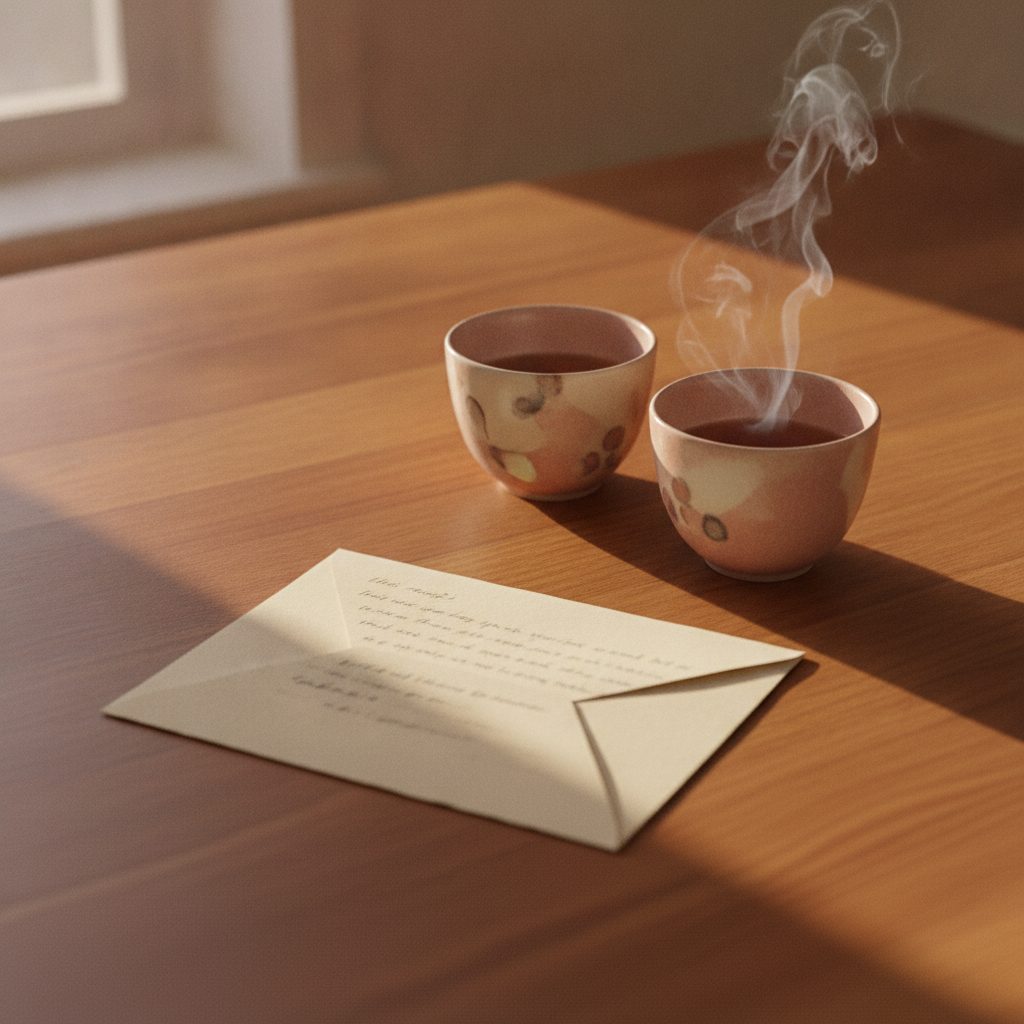
Why a written apology lands harder than another spoken one
Said apologies in the middle of a hard week often sound like the same apology you offered last time, because they sometimes are. Tone gets defensive. The phone rings, the dog needs out, the moment passes. You both walk away half done.
A letter takes the apology out of the room. You can choose your words. They can read them more than once. The defensiveness has nowhere to live on a page if you write the page honestly. That is what makes a written sorry land harder than a spoken one most of the time.
How to start when the words won’t come

Open with what you are sorry for, in one specific sentence. Not a general apology. The thing you did or said. “I am sorry for the way I spoke to you on the phone on Wednesday night.” Specific. Owned.
Do not start with “I know I have said this before.” The page knows. Save that line for the middle, if at all. Start with the apology itself.
Name the impact, not just the act. “I am sorry for the way I spoke to you on Wednesday. I made you feel small in your own house, and that is the part I cannot stop thinking about.” The impact is the line that lets them know you actually understand what happened, not just that something went wrong.
Do not include a defence. Not on the first page. “I was tired and I was stressed” belongs in a separate conversation, not in a sorry letter. The defence dilutes the apology. The letter is for them, not for your reputation in the marriage.
What goes in the middle
The truth of why it happened, if you can write it without it sounding like an excuse. Not the surface reason. The under one. “I have been short with you for weeks because I am scared about work and I have been taking that out on you. That is on me, not on you.” Honest. Owned.
The thing you are going to do differently. Not a list. One real thing. “I am going to stop opening the laptop after seven so I am not bringing work into the kitchen.” Doable. Specific. Theirs to hold you to.
If this is a repeat apology, name that. Quietly. “I know I have said sorry for something close to this before. I do not blame you for being tired of it. I am writing this anyway because I need you to know I see it.” The page can hold that without making it a plea.
How to close a sorry letter
Close with what you want, in one line, and make it small. “I would love a cup of tea with you tonight, no phones.” “I would like to take you for a walk on Sunday and not talk about this if you do not want to.” Small. Doable. No demand for forgiveness on a timeline.
Sign it with whatever they call you at home. Not “your husband” or “your wife.” The home name keeps the letter inside the relationship, not above it.
Examples to borrow from
Sorry letters from readers across different kinds of relationships.
- Read For Wednesday Night, a short sorry letter left on the kitchen table.
- Read I Made You Feel Small, on naming the impact.
- Read A Sorry I Have Said Before, an honest repeat apology.
- Read For the Way I Spoke About Your Mother, on the apology that needed a page.
- Read A Cup of Tea Tonight, a quiet closing line that worked.
What to avoid
- Opening with a defence. “I was tired” can be true and still does not belong on page one.
- Apologising for everything you have ever done. Stay with the specific thing.
- Asking for forgiveness on a timeline. Forgiveness is theirs to give when they can.
- Listing the things they have also done wrong. That is a different conversation, not this letter.
- Sending it the same hour you wrote it. Read it again in the morning first.
Frequently asked questions
What do I write in a sorry love letter?
Open with the specific thing you are sorry for and the impact it had on them. Skip the defence. Name one thing you will do differently. Close with one small, doable wish for what comes next. Sign it with whatever they call you at home.
How long should a sorry letter be?
Half a page to a page. Long sorry letters often slide into self-defence. The shorter the letter, the harder the apology lands. If you are going past a page, you may be writing to convince them you are sorry, not to tell them.
What if they do not reply?
Many people will not reply the same day. Some will not say anything for a week. Look for them being softer in small ways. A cup of tea made without asking. A hand on your back at the sink. The letter often works even when no words come back. Give them time.
What if I have apologised for this before?
Name it in the letter. Quietly, not as a plea. “I know I have said this before and I am writing it anyway.” Then pair the apology with one real thing you are doing differently. A repeat sorry without a behaviour change behind it is the kind that wears people out. The change is what makes the letter land.
Further reading
For a wider look at how letters carry the words spoken conversations cannot, see the history of the love letter, where some of the most kept letters were the ones written to repair what had broken.
Read more about how we host and lightly edit submissions in our editorial standards.