
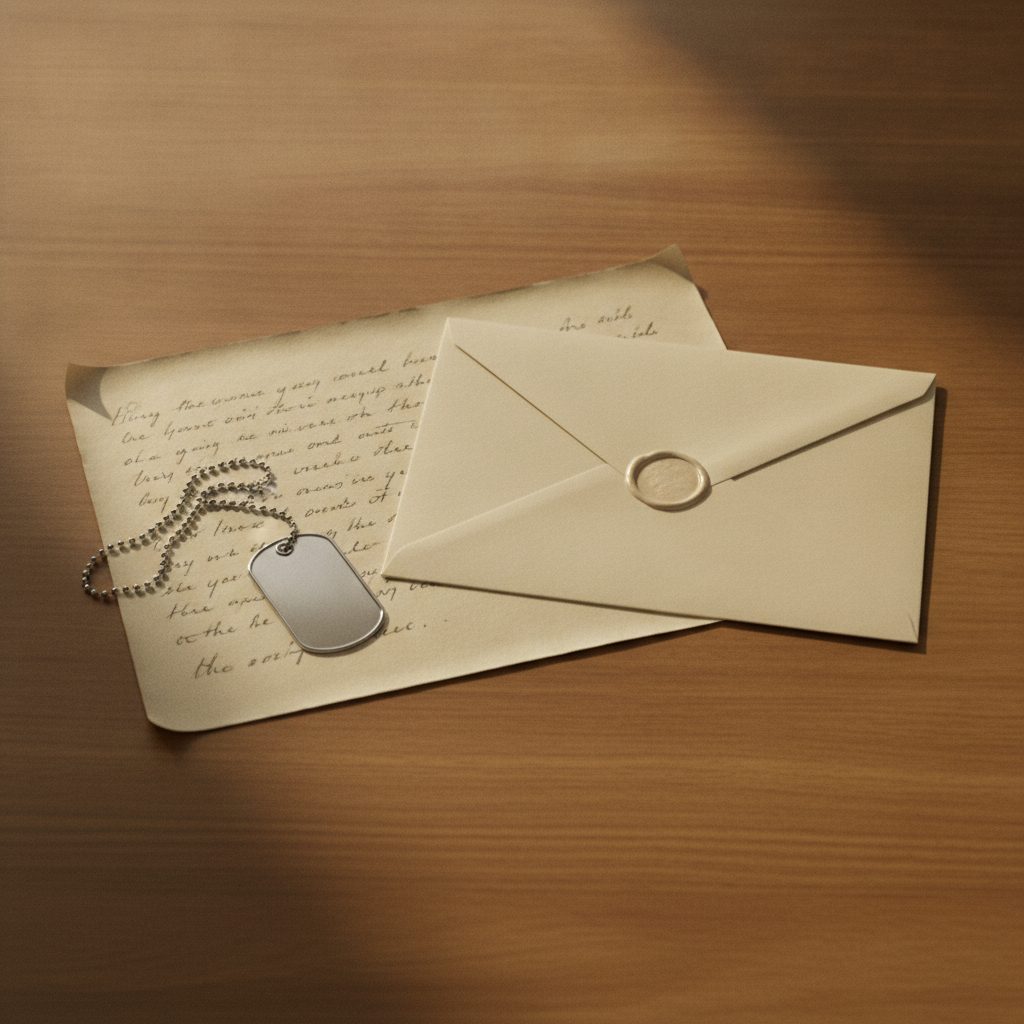
Why a real letter still matters in the age of video calls
Video calls are precious and they are short. They happen at strange hours and they end when the connection drops. A letter does something the call cannot. It sits in a pocket. It gets re-read on a bad day. It is something the person can hold.
For most people serving away from home, the letters they get from a partner are kept and read more than once. Some carry them for the whole deployment. That is what makes the letter worth the slow effort.
How to start when the words won’t come
Open with the date and where you are. “Tuesday, the kitchen, just before I leave for work.” By the time they read it, both the day and the kitchen will feel like proof of home.
Use their name. Not “my soldier.” Not “my hero.” Their actual name. The letter is for the person, not the uniform.
Name one small ordinary thing from your week at home. The dog being weird about the new bin. The neighbour’s daughter starting school. The kitchen tap is leaking again. Boring is good. Boring is what they miss most.
Avoid heavy news in the first paragraph. Even if there is hard news to share later in the letter, give them a soft landing first. One paragraph of home before anything else.
What to put in the middle
Two or three small details from your week. The thing the dog did. The film you watched. A song that came on that made you think of them. Specific. Domestic. Small.
One paragraph for them, naming what you are watching them carry from this side of the world. Not pity. Just acknowledgement. “I think about you in the heat at the end of your day.” “I know last week was a hard one. I read between the lines of your message.”
One plain sentence about them, full stop. “I am proud of you and I will not stop being.” “You are the steadiest person I know.” “I love you and I am here when you get home.” One sentence. Hold the rest of the letter under it.
How to close
Close with a small wish for the week ahead. Not for the deployment. Their week. “I hope the food gets better.” “I hope you sleep through Sunday night.” “I hope you have ten minutes alone to read this.” Small wishes land harder than big ones at distance.
Sign it with whatever you call each other. Add the date again at the bottom. By the time the letter reaches them, that little double date will mean something.
Examples to borrow from
Letters written to partners on deployment.
- Read First Letter, First Week, written in the first quiet week after he left.
- Read For My Husband Overseas, a wife’s letter from the kitchen.
- Read To My Girlfriend, Six Months Out, a quiet letter from home.
- Read Mid Deployment Letter, on the hard middle months.
- Read Letter for the Week Before You Come Home, the last letter of the tour.
What to avoid
- Heavy news in the first paragraph. Give them home first, hard news later in the letter if it has to be there at all.
- A long list of how hard it is at home without them. They cannot help from there. The letter should not add weight.
- Specific details about routes, dates, or locations they have shared with you. Treat their work as private.
- Asking them to write back to every letter. Mail moves slowly. Send letters into the silence and trust them.
- Spraying the letter with perfume or aftershave. Sweet idea, can backfire in a shared space. A plain letter is fine.
Frequently asked questions
How often should I write?
Once a week works for most people. Some write twice a week, some write a long letter every fortnight. Pick a rhythm you can keep up. A steady letter every Sunday is worth more than a flood for two weeks and then nothing for two months.
What if I do not know what to write about?
Write the boring stuff. The weather. The dog. The kitchen. The neighbour. People on deployment do not need news from home as much as they need home. The point is not that anything happened. The point is that you sat down and wrote.
Should I number the letters?
Yes. Mail does not always arrive in order. Write the date and the letter number in the corner, “Letter 4, 14 March,” so they can read them in the right order when a few arrive at once. Small habit, big help.
What if I am scared and I do not want them to know?
Tell them. Most partners on deployment would rather read “I am scared and I am proud of you” than a letter pretending you are fine. Honest letters travel better. The fear lands lighter on the page than it does in your head.
Further reading
For a slow look at the long history of personal letters, see the Smithsonian’s piece on the letters of Frida Kahlo, a reminder that what gets kept is the plain and the specific.
Read more about how we host and lightly edit submissions in our editorial standards.